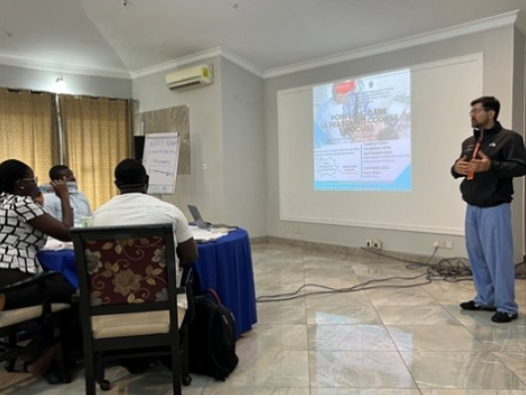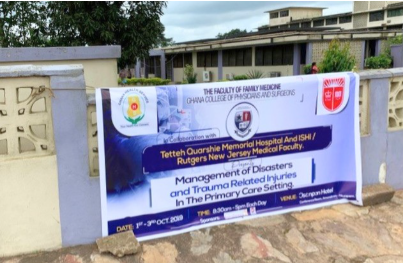
What began in November 2008 as a single trip to Ghana has grown into one of Rutgers’ longest-running global health collaborations. What started with a handful of surgeons traveling overseas to provide care has evolved into a multidisciplinary partnership involving faculty, nurses, residents, fellows, students, and colleagues across multiple specialties—all working toward a common goal that may seem paradoxical:
To make themselves unnecessary.
For Dr. Ziad Sifri and Dr. Harsh Sule, success has never been measured by the number of operations performed during an annual visit. Instead, it is measured by what happens after the Rutgers team returns home: local clinicians teaching new skills, expanding services, and building systems that continue without outside assistance.
“We’re the supporting cast,” Sule says. “We’re not the lead characters. The goal of everything we do is to make ourselves irrelevant.”
That philosophy has shaped every stage of a partnership built not on short-term missions, but on trust, listening, education, and long-term collaboration. The partnership with Tetteh Quarshie Memorial Hospital (TQMH) in Mampong began in 2013, and the University of Cape Coast joined the partnership during the COVID-19 pandemic.
From Service to Partnership
Like many global health initiatives, the collaboration initially focused on providing surgical care in a setting where specialist services were limited.
But it quickly became apparent that the greatest need extended beyond individual operations.
Rather than simply returning each year to perform more procedures, the Rutgers team began asking a different question: How could local capacity continue growing between visits?
That shift fundamentally changed the partnership.
Educational programs expanded alongside clinical care. Monthly virtual conferences connected physicians throughout the year — first over Skype, later WebEx — long before remote collaboration became commonplace, though both physicians acknowledge those connections lost momentum during Covid-19. Every visit became an opportunity not only to care for patients, but also to exchange knowledge, strengthen professional relationships, and identify new priorities together.
Today, the collaboration extends far beyond general surgery. Emergency medicine, anesthesiology, plastic surgery, urology, oncology, women’s health, point-of-care ultrasound, trauma education, and disaster preparedness have all become part of an evolving network of shared learning.
As new needs emerge, so do new partnerships.
Education That Lasts
One of the collaboration’s defining characteristics has been its emphasis on education as the foundation for sustainable healthcare.
Instead of introducing isolated training sessions, the team focuses on helping local clinicians become teachers themselves.
Programs such as Stop the Bleed, point-of-care ultrasound, trauma management, and other procedural skills have adopted “train-the-trainer” models designed to multiply their impact over time. The disaster management and ultrasound courses were co-sponsored by the Ghana College of Physicians and Surgeons and the Society of Family Physicians in Ghana, both national bodies.
Yet experience has taught both physicians that education alone is not enough.
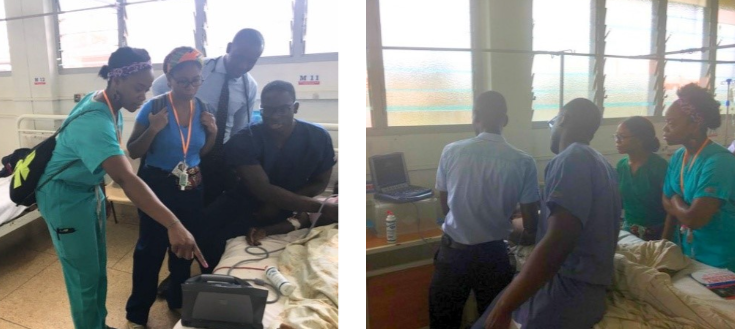
“If you want people to learn these skills,” Sule explains, “they have to become part of the institution’s expectations and training requirements.”
The next step, they believe, is institutionalization.
Whether teaching ultrasound, colonoscopy, disaster preparedness, or hemorrhage control, lasting success depends on integrating those skills into hospital policies, residency curricula, and professional expectations rather than relying solely on the enthusiasm of individual participants.
Sifri echoes the same idea.
“We always ask ourselves, ‘What’s going to take this to the next level? What’s going to make us irrelevant?'”
For both physicians, sustainability begins when programs become part of everyday healthcare rather than depending on the presence of visiting faculty.
Growing Together Across Specialties
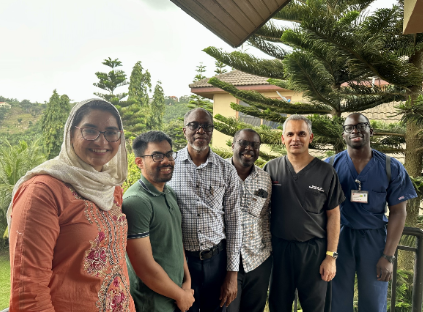
As trust has deepened over the years, the partnership has expanded in response to priorities identified by Ghanaian colleagues themselves. Their Ghanaian partner, Dr. Mawuli K. Gyakobo, a medical superintendent trained in internal medicine at the University of Michigan, established Ghana’s first inpatient palliative care unit.
Some initiatives focus on patients who cannot immediately receive surgery.
Working with colleagues in obstetrics and gynecology, Rutgers faculty have explored ways to improve care for women living with large symptomatic uterine fibroids — roughly 60 percent of whom return home without surgery, managing pain, bleeding and anemia — while they await operative treatment, including collaborative research and efforts to develop non-surgical management protocols.
Other projects emphasize building local procedural expertise.
Urology faculty have supported cystoscopy training for family medicine physicians, leaving the equipment in Ghana so clinicians can continue practicing between visits. Plastic surgeons have developed educational programs in reconstructive surgery and burn care. Surgical oncologists are collaborating with local physicians to establish multidisciplinary approaches to cancer diagnosis and treatment.
Each project reflects the same underlying principle: invest in people, build local expertise, and create systems that continue long after visitors leave.
A Lesson in Cancer Care
One patient, in particular, reinforced the importance of that approach.
During a recent visit, the team was asked to evaluate a woman with advanced breast cancer whose disease had progressed to a devastating stage before treatment became available.
The encounter underscored the urgent need for earlier diagnosis, improved screening, and multidisciplinary planning—not simply another operation.
“That really demonstrated the need to develop some sort of platform,” Sifri says, “so patients aren’t presenting with such advanced disease.”
The experience strengthened ongoing efforts to develop tumor boards, improve cancer education, and support earlier referral pathways that can change outcomes before patients reach advanced stages of disease.
Listening Before Leading
Asked what message they would share with their colleagues in Ghana, neither physician answered by offering advice.
Instead, both questioned the premise itself.
“I’d actually push back on the premise of the question,” Sule says. “I’m there to hear them and listen to them—not tell them.”
That response reflects a philosophy that has become central to the partnership.
Rather than arriving with predetermined solutions, Rutgers faculty routinely ask local colleagues which services should be prioritized, what educational programs would be most valuable, and how the collaboration should evolve.
The answers often challenge assumptions.
Local physicians face competing clinical responsibilities, limited resources, and institutional constraints that visiting teams may not fully appreciate. Recognizing those realities has become essential to designing programs that are both practical and sustainable.
“They live it every day,” Sifri says. “We respect that, and whatever they tell us, we’ll go out of our way to try to make it happen.”
Mutual respect—not one-sided expertise—has become the partnership’s defining characteristic.
Built by Volunteers
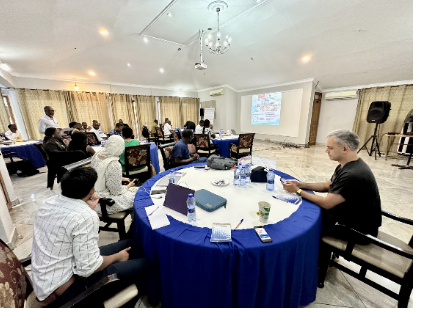
Another remarkable aspect of the collaboration often goes unnoticed. For years, nearly every component of the partnership, from planning and fundraising to travel, teaching, surgery, mentorship, and follow-up, has depended on volunteers. Over the last two decades, approximately 300 volunteers have contributed to the partnership, including over 100 Rutgers faculty, residents, and medical students.
Volunteers have contributed their time and expertise because they believe in the mission and in the relationships that have grown from it.
“We don’t do it for the recognition,” Sule says. “But the recognition helps support the mission.”
That spirit of volunteerism has enabled the partnership to flourish with remarkably limited resources.
At the same time, both physicians recognize that sustaining and expanding these efforts will increasingly require thoughtful institutional engagement. Questions about supporting faculty, residents, and students in global health work remain important as Rutgers’ academic and clinical programs continue to evolve.
The goal is not to replace volunteer commitment, but to create structures that allow even more people to participate while strengthening long-term partnerships.
Looking Ahead
Nearly twenty years after the collaboration began, its greatest achievement may not be measured by the number of operations performed or educational sessions delivered.
Its true success lies in relationships built over decades, in colleagues who have become trusted partners and friends, and in local clinicians who continue expanding programs long after each visiting team has returned home.
What began as a surgical outreach effort has matured into a model of academic global health grounded in humility, shared learning, and mutual respect.
Every new initiative—from trauma education and ultrasound training to cancer care, women’s health, reconstructive surgery, and disaster preparedness—reflects the same conviction: sustainable global health is built by strengthening local leadership rather than creating dependence on outside teams.
For Sifri, the aspiration remains simple.
“We wish we could do more. How can we improve? How can we increase our impact? How can we leverage the spirit of volunteerism to the next level?”
Sule keeps returning to the same answer, the one he has given more than once and does not seem to want to improve on: the supporting cast, not the lead characters, working to make themselves irrelevant.